What happens when the beliefs that helped you become successful are the same ones keeping you from experiencing the success you've worked so hard to create?
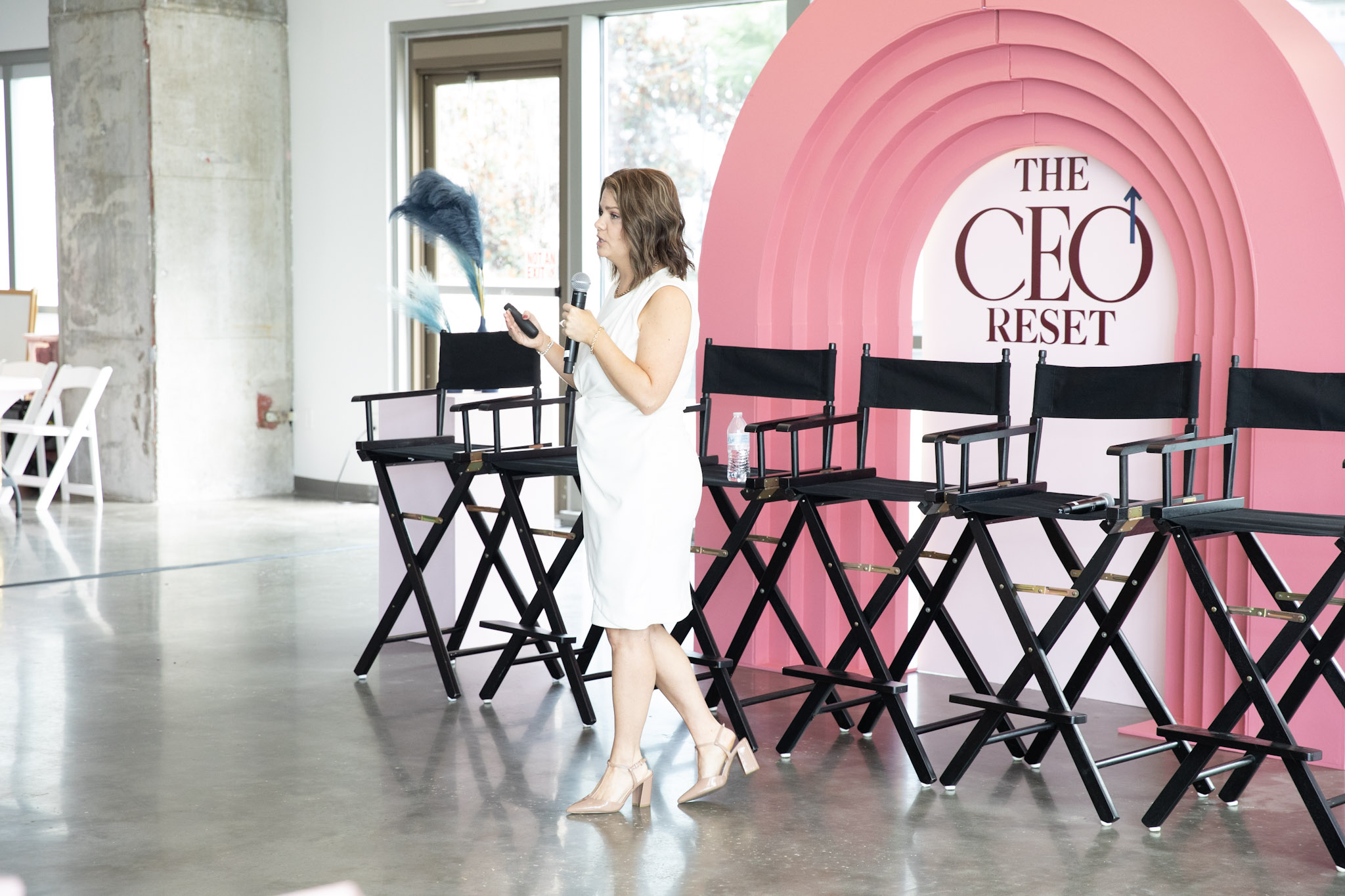
It's a question I've been thinking about a lot lately, especially after having the pleasure of speaking at CEO Reset: Building Firm Foundations, a wonderful event created by Merlyn Colbert to bring women entrepreneurs, business owners, and leaders together for growth, connection, and intentional leadership.
During my session, Rewrite the Rules: The Self-Leadership Advantage, I invited attendees to explore something we don't always make time for as we grow: the internal work of leadership.
Because every new level of leadership, business, and life asks something different of us.
And sometimes, the beliefs, patterns, and expectations that got us here aren't the ones that will help us thrive where we're going.
The Unconscious Rules Shaping How We Lead
We all have rules we live by.
Some were taught to us directly. Others developed through our families, education, professional experiences, or the environments where we learned what it meant to be successful.
Maybe you've carried beliefs like:
- •I have to work harder than everyone else to prove my value.
- •If I want something done right, I have to do it myself.
- •Rest is something I earn after everything is finished.
- •Being a good leader means always being available.
- •Success requires sacrifice.
These beliefs may have served a purpose at one point.
Perhaps working harder helped you earn recognition, build your business, or advance in your career. Being the person everyone could depend on may have helped you establish credibility and trust.
But what happens when those same patterns follow you into a season that requires something different?
The leader who built a successful business through constant availability may now struggle to delegate.
The executive who earned promotions by consistently exceeding expectations may find it difficult to establish boundaries.
The entrepreneur who learned to push through every challenge may have trouble recognizing when it's time to slow down, reflect, or change direction.
The question isn't whether these beliefs were once useful. It's whether they're still aligned with the person you're becoming and the life you're creating.
This is where self-leadership development becomes essential.
What Is Self-Leadership, and Why Does It Matter?
Self-leadership is the ability to intentionally influence how we think, respond, make decisions, and take action in alignment with our values and goals.
It's about more than motivation or discipline.
It requires self-awareness, emotional intelligence in leadership, and a willingness to examine the internal patterns shaping our external results.
As a licensed psychotherapist, leadership keynote speaker, and executive coach, I've spent more than 17 years exploring the relationship between human behavior, beliefs, emotions, and the choices we make.
One thing I've seen repeatedly is that professional growth doesn't automatically create personal alignment.
You can become more successful while simultaneously becoming more disconnected from what matters most to you.
You can gain responsibility without developing the internal capacity to navigate that responsibility with greater ease.
And you can achieve goals you once dreamed about while finding yourself too overwhelmed, distracted, or exhausted to enjoy them.
That's why I believe sustainable leadership development and corporate leadership training must address not only what leaders do, but also the psychology behind how they lead.
Understanding Your Capacity Ceiling
One of the concepts I introduced during CEO Reset was what I call the Capacity Ceiling.
Your Capacity Ceiling represents the internal patterns, beliefs, and responses that can limit your ability to experience and sustain the success you're working toward.
Think about a leader who wants to grow their organization but struggles to trust others with important decisions.
Or an executive who wants more freedom and flexibility but feels guilty whenever they aren't working.
Or a business owner who wants to create a healthier company culture but consistently models urgency, overwork, and constant availability.
Their external goals may be expanding, but their internal patterns haven't necessarily evolved to support that growth.
And eventually, those patterns can become limitations.
This doesn't mean leaders need to eliminate pressure or become perfectly calm in every situation.
It means developing the awareness and skills to recognize when old patterns are driving current decisions.
Because expanding your capacity isn't always about doing more.
Sometimes, it's about changing your relationship with responsibility, achievement, control, and success.
Leadership Under Pressure: Why the Pause Matters
One of the most practical tools we explored during the session was something deceptively simple: the power of the pause.
When we're experiencing leadership under pressure, our attention can narrow. We may become more reactive, impatient, defensive, or focused on immediately resolving whatever feels urgent.
This can influence how we communicate, make decisions, and interact with the people around us.
Consider a leader who receives an unexpected email questioning a decision they've made.
Their immediate response might be to defend themselves, send a lengthy explanation, or interpret the message as criticism.
But what if they paused before responding?
Even 30 to 60 seconds of intentional awareness can create an opportunity to notice what's happening internally and choose a more thoughtful response.
I often encourage leaders to practice what I call a Tactical Pause:
1. Notice.
What am I experiencing right now? What thoughts, emotions, or physical sensations are showing up?
2. Regulate.
Slow down. Take a comfortable breath, release unnecessary tension, or ground yourself in the present moment.
3. Choose.
What response would best align with my values, intentions, and desired outcome?
The goal isn't to suppress emotions or avoid difficult conversations.
It's to create enough space to respond intentionally rather than allowing an automatic reaction to make the decision for us.
Over time, practices like this can support greater emotional awareness, clearer communication, and more intentional leadership under pressure.
Envision–Align–Embody™: A Framework for Intentional Leadership
Awareness is important, but awareness alone doesn't create lasting change.
We also have to practice doing something differently.
This is the foundation of my Envision–Align–Embody™ Leadership Method, a framework I use in my executive coaching and private leadership advisory to help leaders translate internal insight into meaningful action.
1. Envision: Get Clear on What You Actually Want
What does success look like in this next season?
Not simply what you've been taught to pursue or what others expect of you.
What do you genuinely want to create, experience, and contribute?
For some leaders, the answer might include growing a business, leading a larger team, or stepping into an executive role.
For others, it might involve more autonomy, stronger relationships, greater impact, or simply having enough space to enjoy the life they've built.
Clarity creates direction.
2. Align: Identify What Supports or Competes With That Vision
Once you've identified what matters, the next step is examining whether your current beliefs, behaviors, decisions, and commitments support that vision.
If you say you want more freedom but continue accepting every request, there's an opportunity for alignment.
If you want a collaborative team but struggle to delegate, there's an opportunity for alignment.
If you value your well-being but consistently treat rest as optional, there's an opportunity for alignment.
This isn't about judgment.
It's about recognizing where change is needed.
3. Embody: Practice Becoming the Leader Who Can Sustain That Vision
Meaningful change requires more than knowing what to do.
It requires practicing new ways of thinking, responding, communicating, and making decisions.
Maybe that means setting a boundary without overexplaining.
Delegating an important project.
Having a difficult conversation with clarity and compassion.
Taking a pause before responding under pressure.
Or allowing yourself to enjoy an accomplishment without immediately moving the goalpost.
We expand our capacity by repeatedly practicing the behaviors that support the leadership and life we want to create.
Why Organizations Need to Invest in the Human Behind the Leader
Although CEO Reset brought together women business owners and entrepreneurs, these conversations are equally important within corporations and organizations.
The beliefs and behavioral patterns that influence individual leadership don't disappear when someone steps into a management or executive role.
They can show up in organizational culture through:
- •Leaders who struggle to delegate or empower their teams.
- •Reactive communication during high-pressure situations.
- •Unspoken expectations around constant availability.
- •Difficulty navigating conflict or uncertainty.
- •Decision-making driven by urgency rather than intention.
- •Teams that equate productivity with being perpetually busy.
And because leaders influence the environments around them, these patterns can extend beyond the individual.
A manager who feels responsible for everything may unintentionally discourage team autonomy.
A leader who consistently responds with urgency may create a culture where employees feel pressure to do the same.
An executive who struggles to communicate during stressful moments may affect trust and collaboration across the organization.
This is why leadership development, emotional intelligence training, and workplace well-being initiatives are interconnected.
Organizations benefit when leaders develop the skills to understand themselves, communicate effectively, navigate pressure, and create conditions where others can perform well.
And that work requires more than teaching leadership techniques.
It requires helping people recognize the internal patterns that influence how they apply those techniques in real situations.
Three Questions to Rewrite Your Own Rules of Success
Whether you're an executive, entrepreneur, manager, or emerging leader, I encourage you to make space for a little reflection.
1. What rule about success or leadership am I currently living by?
Complete this sentence:
"To be successful, I have to __________."
Notice what comes up without immediately judging it.
2. Is this belief helping me create the success I want today?
Consider how it influences your decisions, relationships, boundaries, and well-being. What has this belief helped you accomplish? And what might it be costing you?
3. What new belief or behavior would better support the leader I'm becoming?
Maybe success doesn't require you to be available to everyone all the time.
Maybe being an effective leader means developing others rather than doing everything yourself.
Maybe creating space to think, recover, and enjoy your life is part of success rather than something that happens afterward.
You don't have to change everything at once.
Start by identifying one rule you're ready to rewrite and one small behavior you can begin practicing differently.
Success Should Feel Good to Live
One of the questions I left attendees with at CEO Reset was this:
"What's the point of building a successful business, career, or life if we don't have the capacity to actually enjoy it?"
I want leaders to experience success that not only looks good on paper, but feels good to live.
Success that creates greater freedom rather than constant obligation.
Leadership that allows for confidence without needing to control everything.
Growth that supports meaningful impact without requiring the continual sacrifice of your well-being.
And organizations where strong performance and human well-being aren't treated as competing priorities.
Because the next level of leadership may not require you to work harder.
It may require you to rewrite the rules.
Bring the Self-Leadership Advantage to Your Organization
I'm Angela M. Williams, LCSW, founder of Angela Williams Consulting, an Orlando-based leadership development and executive coaching firm serving organizations and professionals nationwide.
Drawing on more than 17 years of experience in psychology and human behavior, I bring practical, psychology-informed strategies to leadership development, emotional intelligence, stress management, and sustainable leadership.
Through leadership keynote speaking, interactive corporate training, executive coaching, and organizational consulting, I help leaders and teams better understand how they think, respond, communicate, and lead.
Whether you're planning a women's leadership conference, corporate leadership retreat, executive development program, or professional development workshop, I'd love to explore how we can create a meaningful experience for your audience.
Explore my leadership speaking and training programs →
Elevate your potential. Expand your impact. Enjoy your life.